
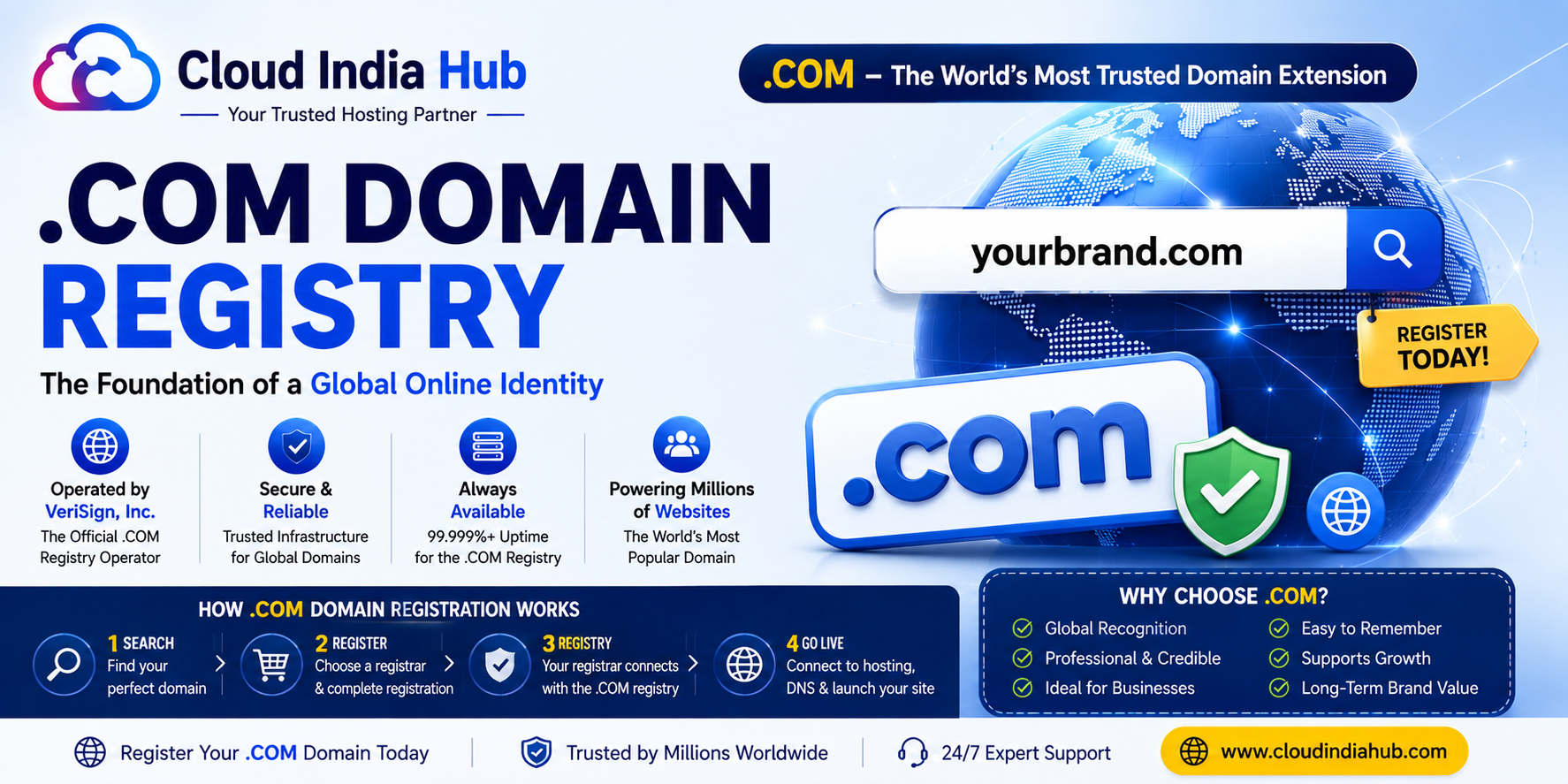
.com Domain Registry: Complete Guide to How the .COM Registry Works in 2026
If you are planning to register a .com website, you may have come across the term com domain registry while researching domain registration, registrars, or domain ownership.
But what exactly is a .com domain registry? Who operates it? What is the difference between a registry and a registrar? How does a .com domain move from a search box to an active website? And what role does a company such as GoDaddy or Cloud India Hub play in the process?
The answers are important because domain registration involves several different layers. A registry operates the infrastructure for a domain extension, while a registrar provides the customer-facing service through which you register and manage your domain.
The current ICANN .com Registry Agreement identifies VeriSign, Inc. as the .com registry operator. ICANN renewed the agreement with VeriSign in 2024, with the current agreement dated 1 December 2024.
This guide explains everything you need to know about the com domain registry, including how .com works, how to register a domain, how registry and registrar systems differ, what happens after registration, and how to choose a reliable domain provider.
Quick Answer: What Is the .COM Domain Registry?
The .com domain registry is the authoritative registry system responsible for maintaining the .com top-level domain.
VeriSign, Inc. operates the .com registry under its agreement with ICANN. The registry maintains the authoritative .com registration infrastructure, while domain registrars provide customers with the ability to search, register, renew, transfer, and manage .com domains.
For example, if you want to register:
yourbusiness.com
you normally do not visit VeriSign directly.
Instead, you use a registrar such as a domain registration provider, search for your desired domain, complete registration, and the registrar communicates with the .com registry.
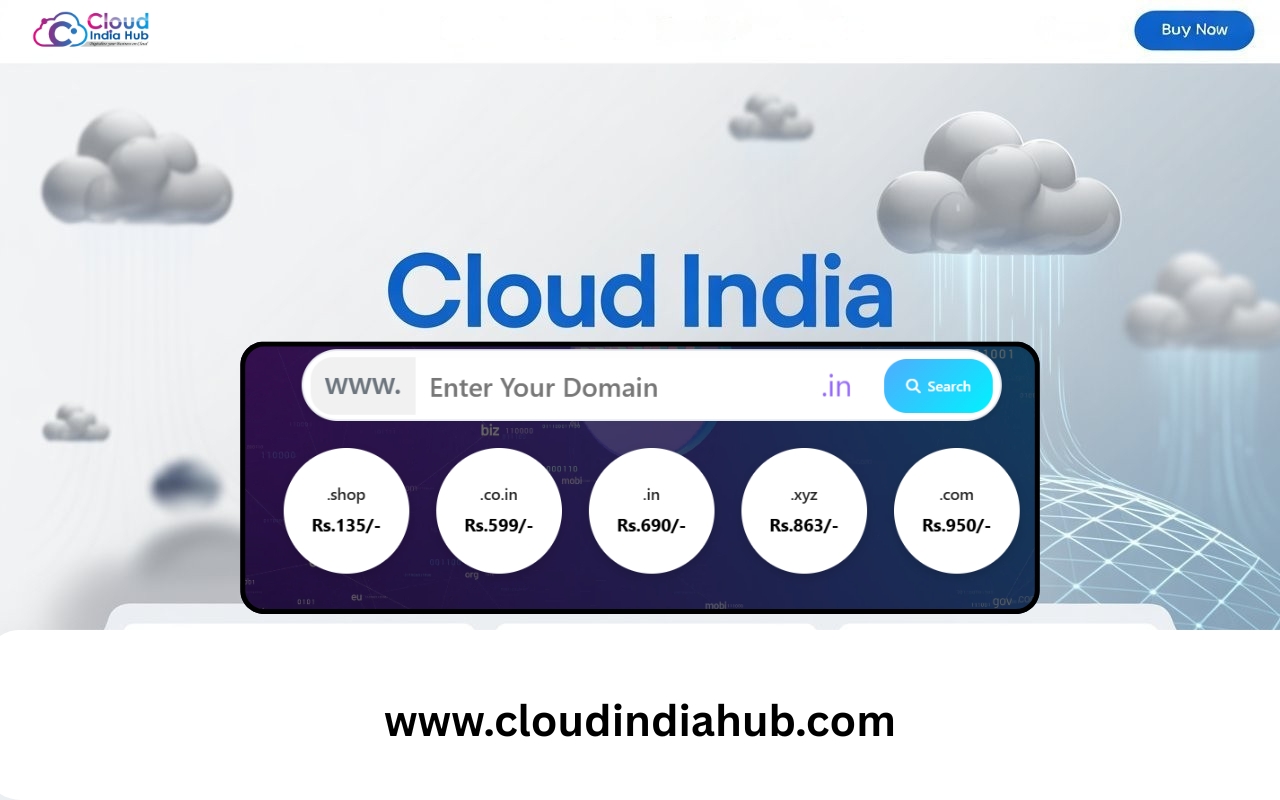
If you're ready to search for a domain, you can explore Cloud India Hub's domain registration services.
What Is a Domain Registry?
A domain registry is the organization or registry operator responsible for maintaining the authoritative database and technical infrastructure for a particular top-level domain.
A top-level domain is the extension at the end of a domain name.
Examples include:
-
.com -
.net -
.org -
.in -
.au
Different extensions can have different registry operators and policies.
The registry handles the infrastructure that allows authorized registrars to create and manage domain registrations.
What Does a Domain Registry Do?
A registry performs important technical functions behind the scenes.
These can include:
- Maintaining registration records
- Operating registry databases
- Managing authoritative zone data
- Supporting registrar connections
- Processing domain registration requests
- Processing renewals
- Processing transfers
- Maintaining nameserver information
- Supporting domain status changes
For .com, VeriSign states that it operates the authoritative registry for .com and .net, providing registration services and authoritative resolution infrastructure.
What Is the Difference Between a Registry and a Registrar?
This is one of the most important concepts to understand when researching the com domain registry.
A registry operates the domain namespace.
A registrar provides the service customers use to register and manage domains.
Simple Example
Imagine you want:
mybusiness.com
You search for the domain through a registrar.
The registrar checks availability and submits the registration request through the appropriate registry system.
The registry maintains the registration record.
You then manage the domain through your registrar account.
Registry vs Registrar
| Feature | Domain Registry | Domain Registrar |
|---|---|---|
| Main role | Operates the domain namespace | Provides domain services to customers |
| Customer-facing | Usually no | Yes |
| Domain search | Registry infrastructure | Customer search interface |
| Registration | Processes registry transaction | Sells/registers domain to customer |
| Renewal | Registry-level processing | Customer completes renewal through registrar |
| Support | Registry-level/technical | Customer support |
| Example for .com | VeriSign | Registrar/provider |
This distinction is useful when researching companies such as GoDaddy, Namecheap, or Cloud India Hub.
Who Operates the .COM Domain Registry?
The current .com registry is operated by VeriSign, Inc.
ICANN's current .com Registry Agreement lists VeriSign as the operator, with the agreement dated 1 December 2024.
VeriSign also describes itself as the operator of the authoritative registry for .com, .net, .cc, and .name.
This means that when you register a .com domain through a registrar, the registrar interacts with the underlying .com registry infrastructure.
Why Is VeriSign Important to .COM?
The registry infrastructure needs to be:
- Highly available
- Scalable
- Secure
- Consistent
- Reliable
- Globally accessible
A .com domain may be accessed by users anywhere in the world, so the underlying registry and DNS infrastructure needs to support a large global ecosystem.
VeriSign reports that its .com DNS infrastructure has maintained continuous availability for more than 29 years.
How Does the .COM Domain Registry Work?
The process can be simplified into several stages.
Step 1: You Search for a Domain
You enter a name such as:
yourbrand.com
into a registrar's domain search tool.
Step 2: Availability Is Checked
The registrar checks whether the domain is already registered.
Step 3: You Register the Domain
If the name is available, you provide the required information and complete payment.
Step 4: The Registrar Sends the Request
The registrar communicates with the .com registry using the appropriate registry protocol.
Step 5: The Registry Creates or Updates the Registration
The registry processes the transaction and maintains the registration record.
Step 6: DNS Connects the Domain
Your nameservers and DNS records determine where your domain's website, email, and other services are directed.
Step 7: Visitors Can Access Your Website
Once DNS information propagates and your hosting is correctly configured, visitors can access your website using the domain.
What Is a .COM Domain?
.com is a generic top-level domain, commonly used by businesses, organizations, startups, online stores, and individuals.
The extension is widely recognized internationally.
For example:
brand.com
company.com
store.com
service.com
Because .com is familiar to internet users around the world, many businesses prefer it when building an international or brand-focused website.
Why Is .COM Still Popular?
There are several reasons businesses continue to choose .com.
Global Recognition
People in many countries are familiar with .com.
Professional Branding
A clean .com can create a professional impression for businesses.
Easy to Communicate
Customers generally recognize .com when hearing a website address.
Long-Term Brand Value
A strong .com can become an important part of a company's brand identity.
Wide Availability of Supporting Services
.com domains can be used with:
- Web hosting
- WordPress
- WooCommerce
- Business email
- Cloud services
- SSL certificates
- DNS services
- Marketing platforms
If you're building a complete website, you can also explore Cloud India Hub Web Hosting.
How to Check .COM Domain Availability
Before completing your com domain registration, you need to check whether the name is available.
For example, you may want:
yourcompany.com
Search the domain using a domain availability tool.
If it is available, you can proceed with registration.
If it is already registered, consider:
- Another brand name
-
Another
.comvariation -
.in -
.co.in -
.shop - Another suitable extension
You can use Cloud India Hub's Domain Availability Checker to check domain availability.
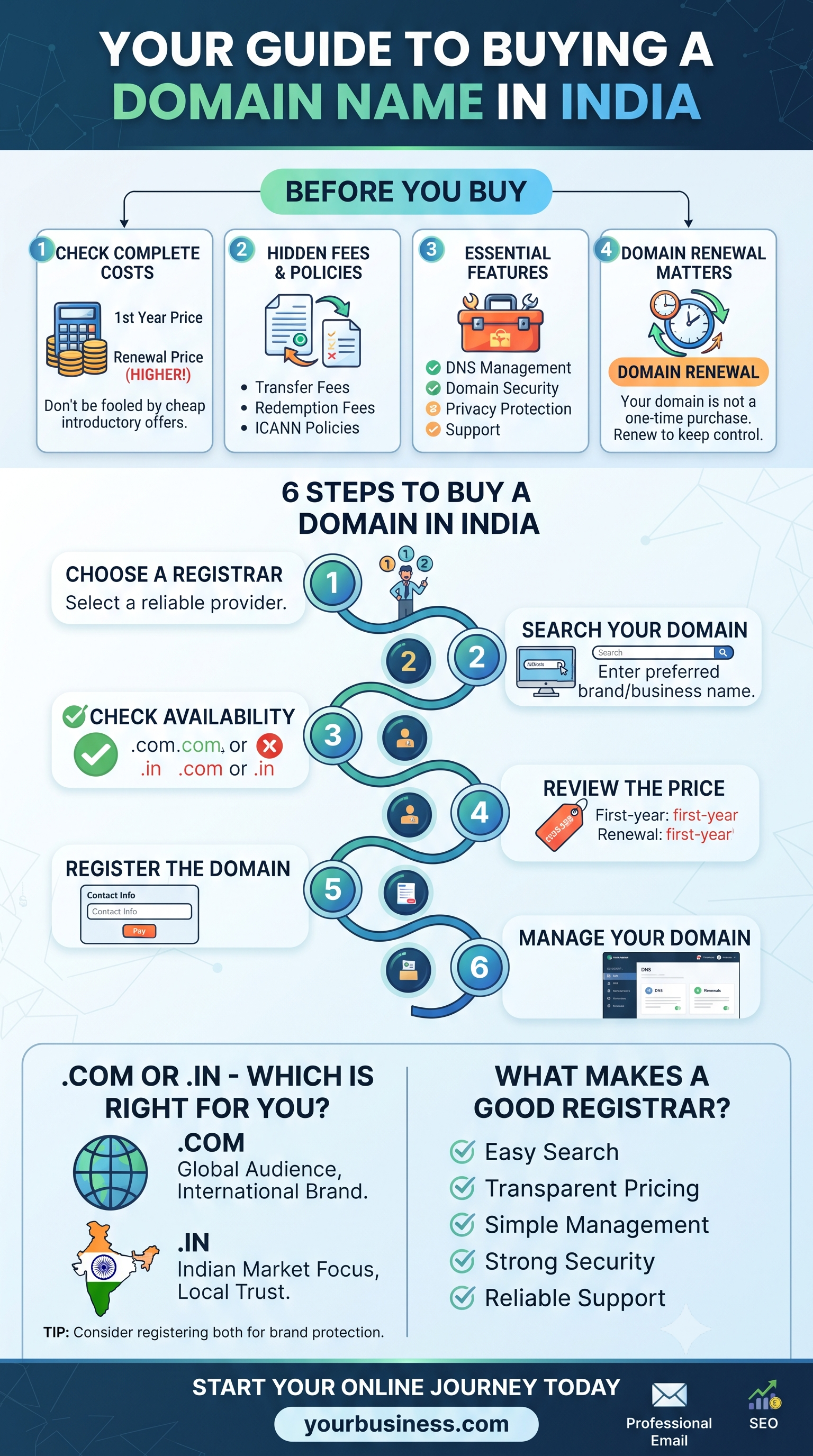
How to Register a .COM Domain
Registering a .com domain is relatively simple.
Step 1: Choose Your Domain Name
Select a name that is:
- Short
- Memorable
- Easy to spell
- Brandable
- Relevant to your business
Step 2: Check Availability
Use a domain search tool to check whether the .com version is available.
Step 3: Compare Registration Prices
Don't compare only the first-year promotional price.
Check:
- Registration cost
- Renewal cost
- Privacy
- Transfer fees
- Additional services
- Taxes
Step 4: Complete Your Details
Provide the required registration information.
Step 5: Pay for the Domain
Complete the registration payment.
Step 6: Manage Your Domain
After registration, you can manage:
- Nameservers
- DNS records
- Domain lock
- Renewal
- Transfers
- Redirects
You can read Cloud India Hub's Buy Domain Online guide for additional information.
What Is a Registrar?
A registrar is a company that provides domain registration services to customers.
When you purchase a .com, the registrar acts as the customer-facing layer between you and the registry.
A registrar may provide:
- Domain search
- Domain registration
- Renewals
- Transfers
- DNS management
- Domain locking
- Privacy services
- Customer support
This means you normally interact with your registrar rather than directly with the .com registry.
For example, Cloud India Hub provides domain registration and management services through its platform.
You can also explore Cloud India Hub's Buy Domain Name service.
Is GoDaddy the .COM Domain Registry?
No. GoDaddy is not the .com registry operator.
GoDaddy is a domain registrar and hosting provider.
The .com registry is operated by VeriSign under the current ICANN registry agreement.
This distinction is important because people sometimes use the phrase "GoDaddy domain registry" when they actually mean GoDaddy's domain registration service.
GoDaddy's Role
GoDaddy can provide customers with:
- Domain registration
- Domain renewal
- Domain transfers
- DNS management
- Hosting
- Website services
VeriSign's Role
VeriSign operates the underlying .com registry infrastructure.
Therefore:
GoDaddy = Registrar
VeriSign = .COM Registry Operator
You = Registrant
What Is a Registrant?
The registrant is the person or organization that holds the registration rights for a domain under the applicable registration agreement.
For example, if you register:
yourbusiness.com
your business or you as an individual can be the registrant.
The registrar manages the customer relationship and registration process.
The registry maintains the underlying registry infrastructure.
Registry vs Registrar vs Registrant
Here's the simplest way to understand the relationship:
| Term | Meaning | Example |
|---|---|---|
| Registry | Operates the domain namespace | VeriSign for .com |
| Registrar | Provides domain registration services | A domain registrar |
| Registrant | Person or organization registering the domain | You or your company |
| DNS | Directs domain services | Website/email destination |
Understanding these roles helps avoid confusion when researching domain registration providers.
What Is a Domain Registry Check?
A domain registry check is a lookup used to examine registration-related information about a domain.
Depending on the information available for the particular TLD, you may be able to see:
- Registrar
- Domain status
- Registration date
- Expiration date
- Nameservers
- Registry-related information
Modern registration-data systems may use RDAP rather than traditional WHOIS workflows. ICANN's renewed .com agreement specifically includes provisions for providing registration data through RDAP.
Why Perform a Registry Check?
A domain lookup can be useful when:
- Buying a domain
- Investigating an existing domain
- Troubleshooting registration issues
- Checking registrar information
- Reviewing domain status
- Preparing for a transfer
What Happens After You Register a .COM Domain?
Registering the domain is only the first step.
You still need to connect it to your online services.
Connect Web Hosting
Your domain needs to point to the server hosting your website.
If you're launching a new website, compare Cloud India Hub's Hosting Plans.
Configure DNS
DNS records can direct your domain to:
- Website hosting
- Email servers
- Subdomains
- Verification services
- Other applications
Install SSL
Your website should use HTTPS.
Create Business Email
You can create addresses such as:
info@yourcompany.com
sales@yourcompany.com
support@yourcompany.com
Build Your Website
You can then install WordPress, WooCommerce, or another website platform.
For WordPress users, see Cloud India Hub WordPress Hosting.
.COM Domain Registration and Web Hosting: What's the Difference?
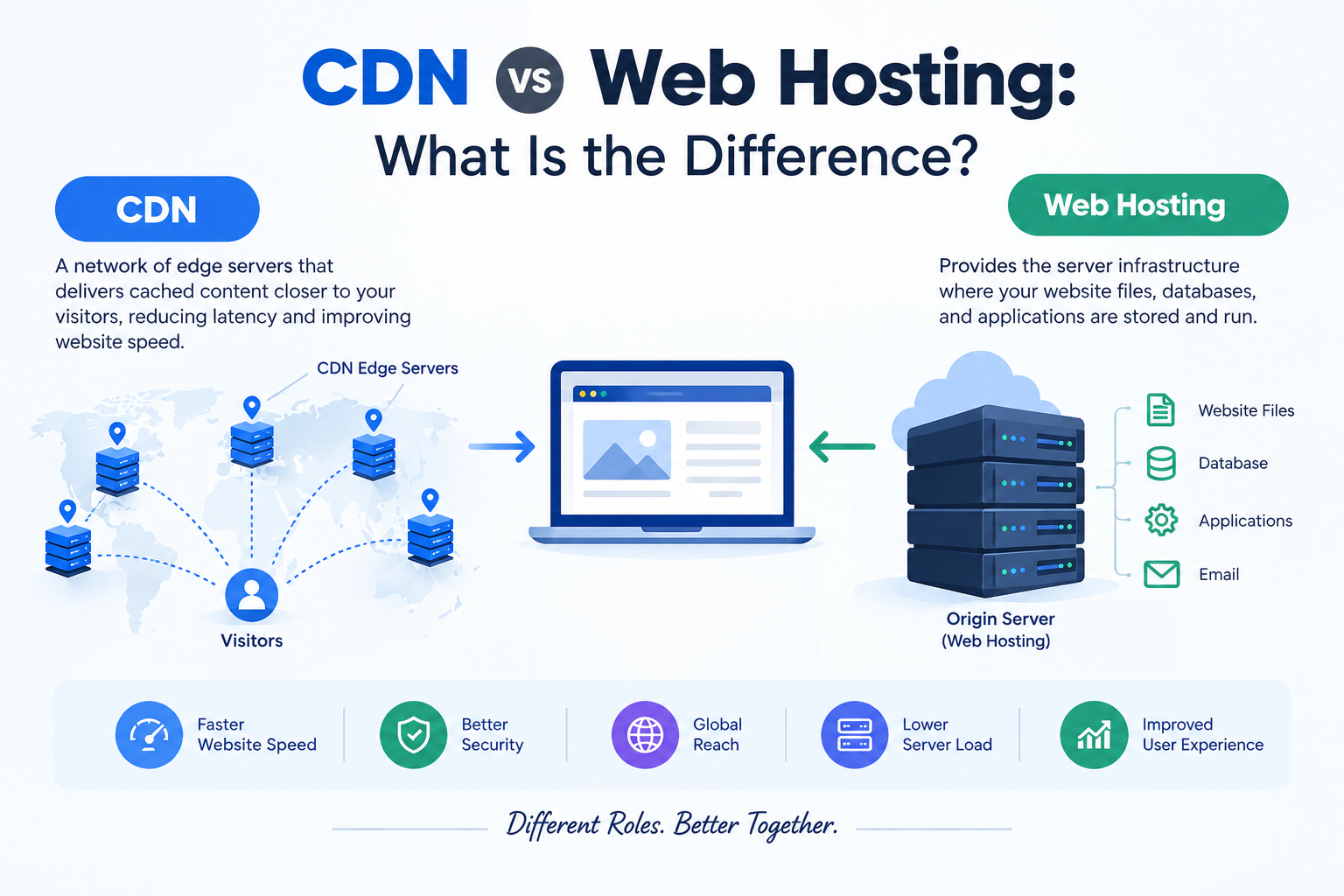
A domain and hosting are two different services.
Domain
Your domain is your website's address.
Hosting
Hosting provides the server infrastructure where your website files are stored.
SSL
SSL enables encrypted HTTPS communication.
DNS
DNS connects your domain to the correct services.
Think of it like this:
Domain = Address
Hosting = Property
Website = Building
DNS = Directions
This is why purchasing a .com alone does not automatically create a website.
For a combined setup, read Cloud India Hub's Hosting and Domain Services guide.
How Much Does a .COM Domain Cost?
The price of a .com domain varies between providers and promotions.
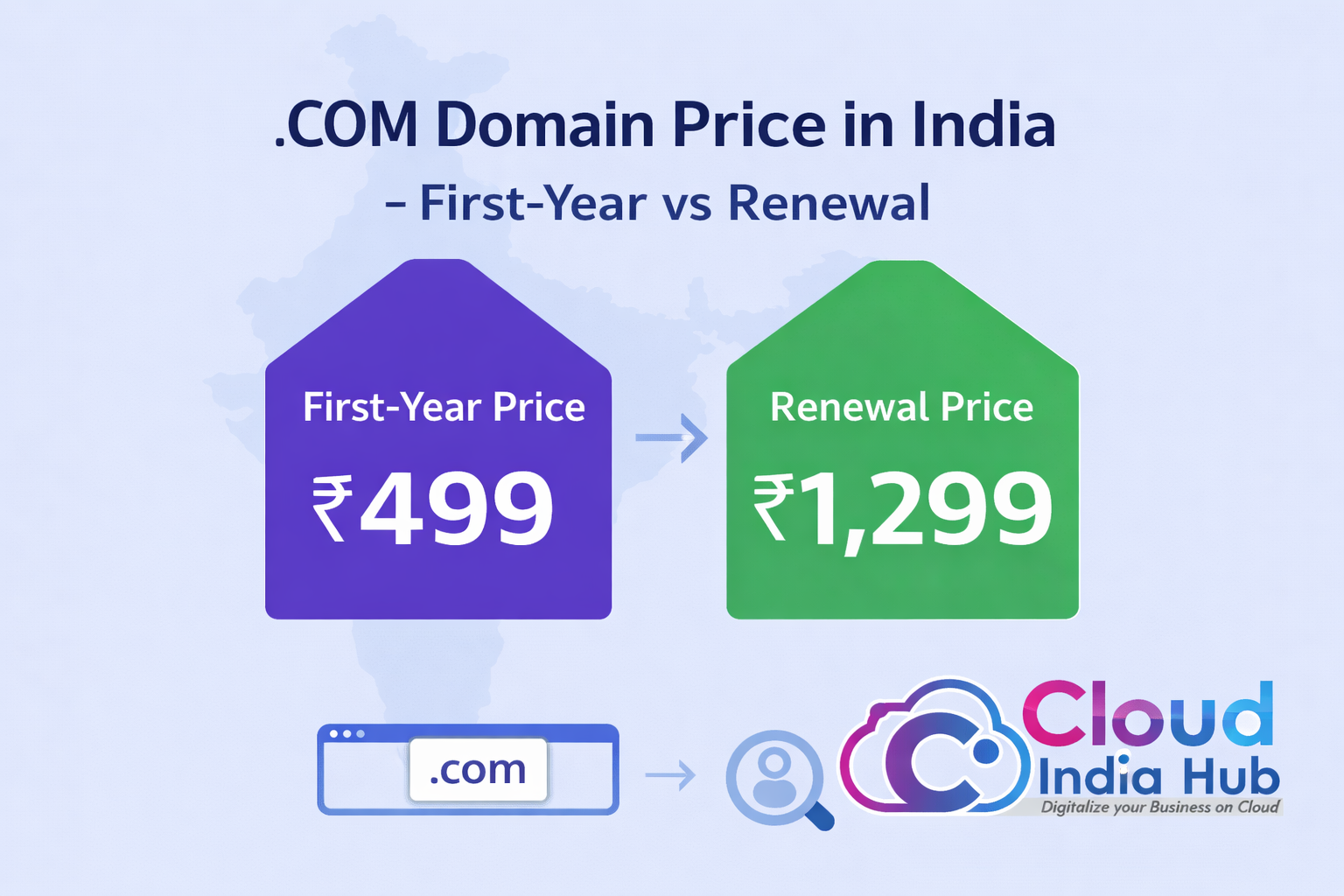
Cloud India Hub currently displays .com promotional pricing on its website, alongside other extensions. The current displayed .com price is ₹950, while promotional offers can change and may have specific conditions.
Always compare:
- First-year price
- Renewal price
- Registration period
- Privacy cost
- Transfer fees
- Taxes
- Add-ons
A low first-year price does not necessarily mean a low long-term cost.
For more information, read Cloud India Hub's Cheap Domain Registration Guide.
What Should You Check Before Buying a .COM?
Before purchasing a domain, check several factors.
1. Domain Availability
Make sure the exact domain is available.
2. Renewal Pricing
Check what you will pay after the initial registration period.
3. Domain Lock
A domain lock can help prevent unauthorized transfers.
4. DNS Management
Make sure you can manage the DNS records you need.
5. Transfer Policy
Check how easily the domain can be transferred if you change providers.
6. Privacy Options
Check whether privacy protection is available and what information may be publicly displayed.
7. Customer Support
Domain problems can affect your website and business email, so support matters.
Cloud India Hub provides domain and hosting support through its Support System.
How to Protect Your .COM Domain
Once you register your domain, protect the account and registration.
Enable Auto-Renewal
Auto-renewal can help prevent accidental expiration.
Use a Strong Password
Your domain account can control important website and email settings.
Enable Two-Factor Authentication
If supported, two-factor authentication adds another layer of account protection.
Keep Your Email Updated
Your registrar may send renewal and verification notifications to your registered email address.
Check DNS Changes
Unexpected DNS changes can affect your website and email.
Keep Payment Details Updated
Expired payment information can cause renewal failures.
What Happens If a .COM Domain Expires?
A domain does not remain registered forever.
You generally need to renew it before the registration period expires.
If you don't renew it, the domain can move through expiration and recovery stages depending on the registrar and applicable registry policies.
The exact lifecycle can vary, so you should not assume every domain follows the same timeline.
Cloud India Hub's terms explain that domain registrations are subject to the rules of the relevant domain registries and that renewal fees apply according to the service terms.
You can review Cloud India Hub Terms and Conditions.
Can You Transfer a .COM Domain?
Yes, .com domains can generally be transferred between eligible registrars, subject to applicable transfer requirements and policies.
A domain transfer changes the registrar managing the domain.
It does not mean you are purchasing a completely new domain.
Before starting a transfer, check:
- Domain lock status
- Authorization requirements
- Transfer eligibility
- Contact information
- Transfer charges
- Registration status
Cloud India Hub also provides information about domain transfers through its domain services.
Can You Register Multiple .COM Domains?
Yes.
Businesses sometimes register multiple domains to protect their brand.
For example:
brand.com
brand.in
brand.co.in
brand.shop
You might also register common spelling variations and redirect them to your primary website.
However, don't buy large numbers of domains without a clear reason.
A few strategically selected domains may be enough to protect your core brand.
Why Choose Cloud India Hub for .COM Domain Registration?
Cloud India Hub offers domain registration and hosting services for businesses, startups, eCommerce websites, bloggers, and individuals.
Its current website promotes domain registration, multiple extensions, domain privacy, DNS management, domain locking, transfers, hosting, SSL, and business email services.
You can learn more through About Cloud India Hub.
If you are also looking for website infrastructure, explore Web Hosting in India.
For eCommerce businesses, see E-commerce Hosting in India.
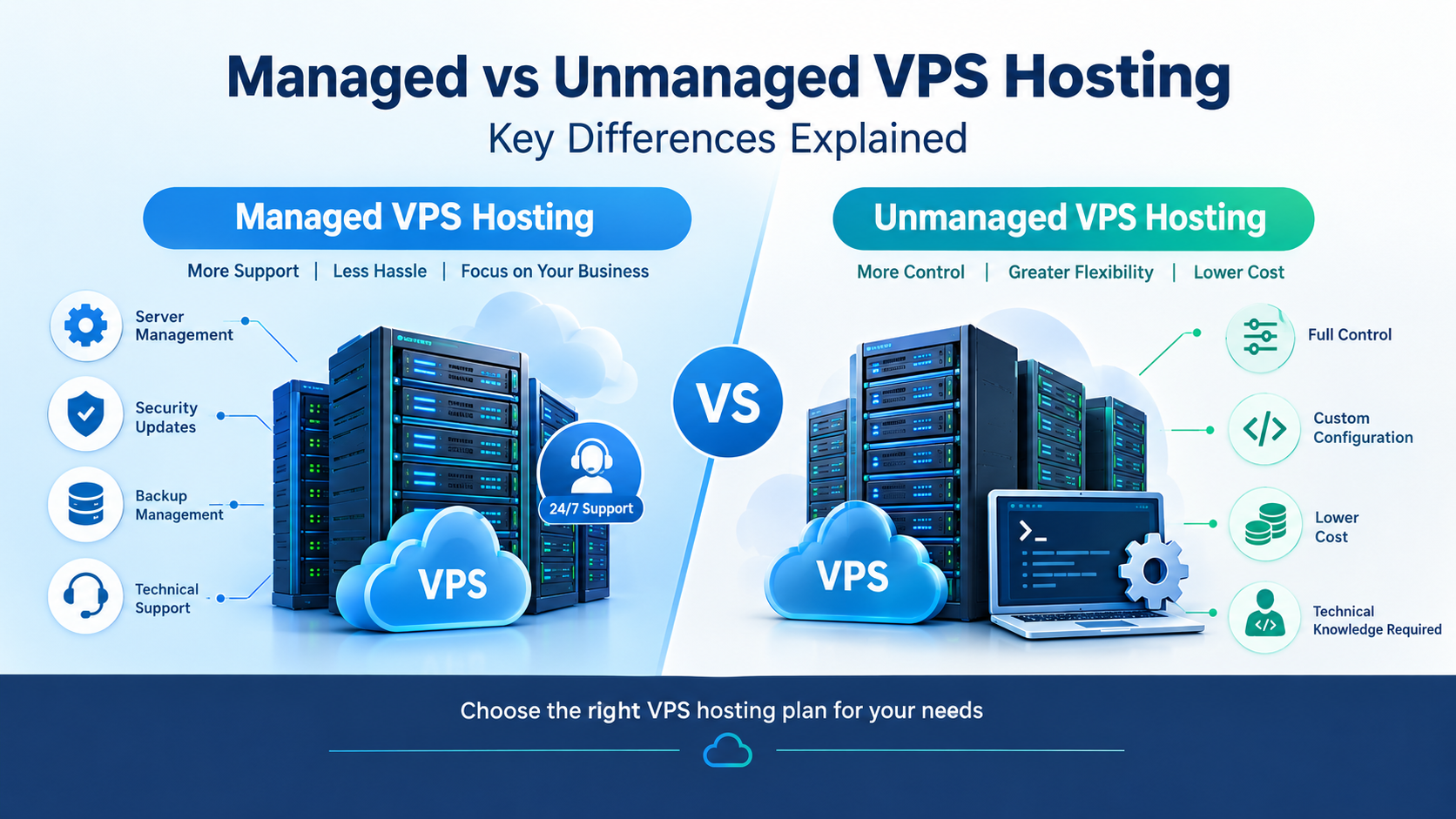
If you need more server resources, compare Shared Hosting vs VPS Hosting.
You can also browse the Cloud India Hub Blog for more domain and hosting guides.
Common .COM Domain Registration Mistakes
Choosing Only Based on Price
A cheap first-year price can be attractive, but always check renewal pricing.
Choosing a Difficult Domain
Long and complicated domains can be difficult for customers to remember.
Ignoring Trademark Issues
A domain being available does not mean you automatically have trademark rights to the name.
Forgetting Renewal
An expired domain can eventually create serious problems for your website and email.
Sharing Your Registrar Password
Never share your domain account credentials unnecessarily.
Ignoring DNS Security
Unauthorized DNS changes can redirect website traffic or interfere with email.
Buying Unnecessary Add-ons
Review your checkout carefully before purchasing additional services.
AEO Quick Answers
Who operates the .com domain registry?
VeriSign, Inc. operates the .com domain registry under its current agreement with ICANN.
Is GoDaddy the .com registry?
No. GoDaddy is a registrar and domain services provider, while VeriSign operates the .com registry.
What is a .com domain registry?
A .com domain registry is the authoritative registry infrastructure responsible for maintaining .com domain registration data and supporting the operation of the .com namespace.
What is the difference between a registrar and registry?
A registry operates a domain namespace, while a registrar provides customers with domain registration and management services.
Can I buy a .com domain without hosting?
Yes. You can register a .com domain separately and connect it to hosting later.
How do I check if a .com domain is available?
Use a domain availability search tool, such as Cloud India Hub's Domain Availability Checker.
Frequently Asked Questions
1. What is the .com domain registry?
The .com domain registry is the authoritative registry system for the .com top-level domain. VeriSign, Inc. is the current .com registry operator under its agreement with ICANN.
2. Is VeriSign a domain registrar?
VeriSign operates the .com registry rather than functioning as the typical customer-facing registrar through which individuals purchase domains. Its registry infrastructure supports registrars that provide .com registration services.
3. Is GoDaddy a domain registry?
No. GoDaddy is primarily a registrar and domain services provider. The .com registry is operated by VeriSign.
4. How does a .com domain registration work?
You search for an available .com through a registrar, provide your registration information, select the registration term, complete payment, and the registrar processes the registration through the .com registry.
5. Can I transfer my .com domain?
Yes, .com domains can generally be transferred between eligible registrars when the applicable requirements are met.
6. How long does .com domain registration last?
The registration period depends on the term you select and the registrar's available options. Domains need to be renewed before expiration if you want to keep them.
7. Can I use a .com domain for an Indian business?
Yes. .com is a global domain extension and can be used by businesses in India. An Indian business can also consider .in or .co.in depending on its branding and target audience.
8. Does registering a .com domain include hosting?
No. Domain registration and web hosting are separate services, although some providers offer them together as a bundle.
Conclusion
The com domain registry is an important part of the global domain-name system, but it is different from the registrar you use to purchase your website address.
The current ICANN .com Registry Agreement identifies VeriSign, Inc. as the .com registry operator. The registry provides the underlying infrastructure and maintains the .com namespace, while registrars provide the customer-facing services used to search, register, renew, transfer, and manage domains.
Understanding the difference between a registry, registrar, registrant, and DNS makes it easier to understand what happens when you register a .com domain.
If you are planning to register a domain, don't focus only on the registration price. Check renewal costs, domain management features, DNS controls, security, transfer policies, privacy options, and customer support.
Cloud India Hub provides domain registration, web hosting, WordPress hosting, VPS hosting, eCommerce hosting, business email, SSL, and related services for businesses and individuals.
If you're ready to register your .com, start by checking your preferred domain name, compare the available options, and choose a provider that can support both your domain and website as your online presence grows.












































































































































































Leave A Comment