

Your website cannot go live without an address, and that address starts with domain booking. Get this step wrong and you end up with a name nobody can spell, a renewal trap, or a listing that never gets indexed.
This guide walks through what the process involves, what it costs in India right now, and how to complete the domain name registration process without the usual confusion around extensions and hidden renewal fees.
It also covers how to book a domain name online in five steps, so you can go from a blank search box to a live address in one sitting.
Key takeaways
- Registering a domain reserves a name for you, it does not include hosting unless bundled
- .in domains typically cost less than .com at first-year pricing in India
- You need only basic contact and payment details to register, no company paperwork
- Renewal price is often higher than the first-year offer, so check it before you buy
- Bundling a domain with hosting usually saves money over buying each one separately
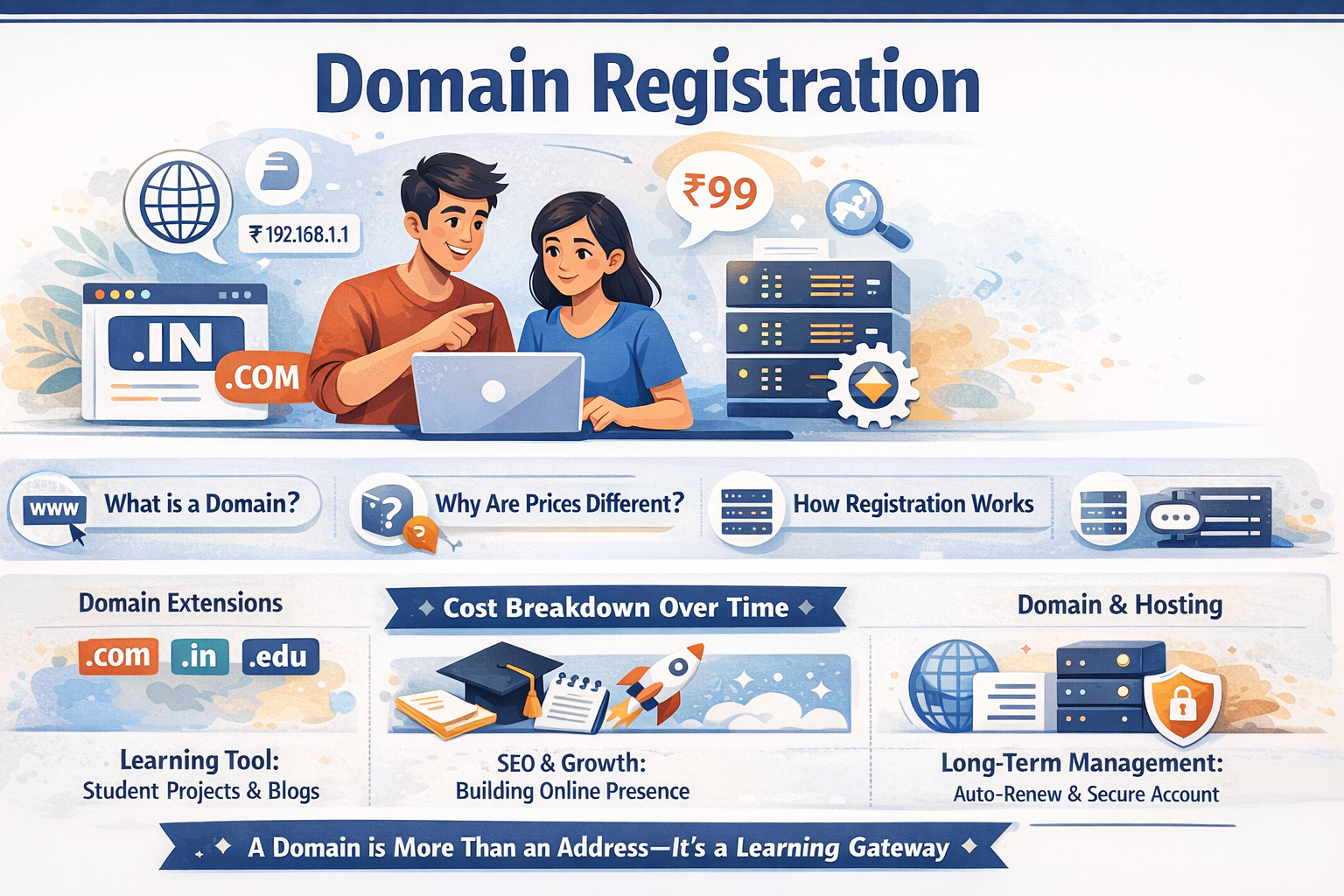
What is domain registration and why does it matter?
Registering a domain name is the act of reserving a unique web address with an accredited registrar so nobody else can use it while your registration is active. It matters because your domain is your permanent digital address, and losing it to someone else later can be expensive or impossible to reverse.
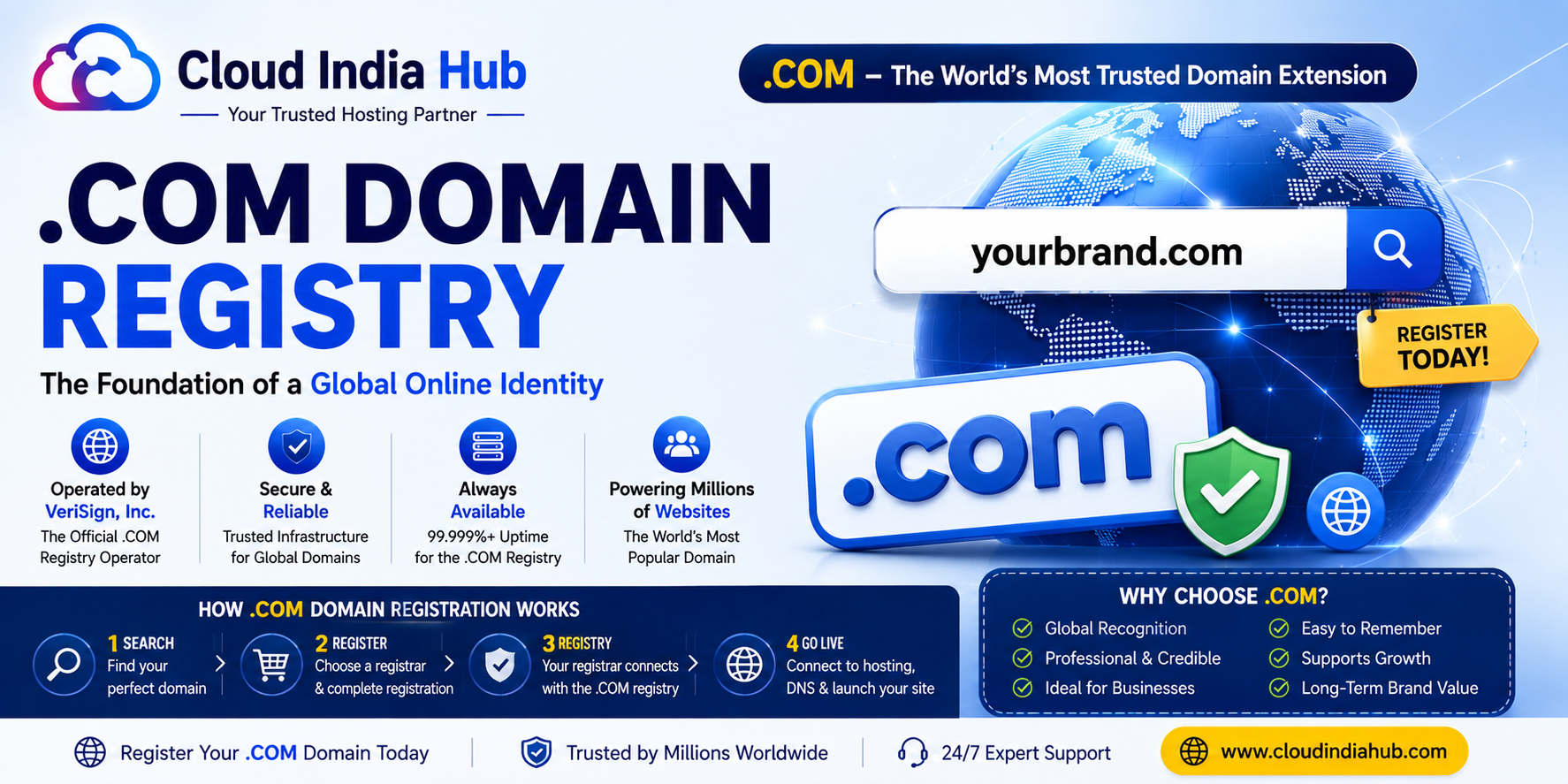
When you finish this step, the registrar submits your details to the relevant registry, whether that is Verisign for .com or the .IN Registry for India's country code domain. The registry adds your record to the global DNS system, and within minutes your domain resolves to whichever server you point it at.
A short, brand-relevant name is easier to remember and type, which directly affects how many people actually reach your site instead of mistyping a competitor's address. Search engines also treat a clean, readable domain as a small trust signal, since it looks less like a throwaway or spam listing.
How much does domain booking cost in India?
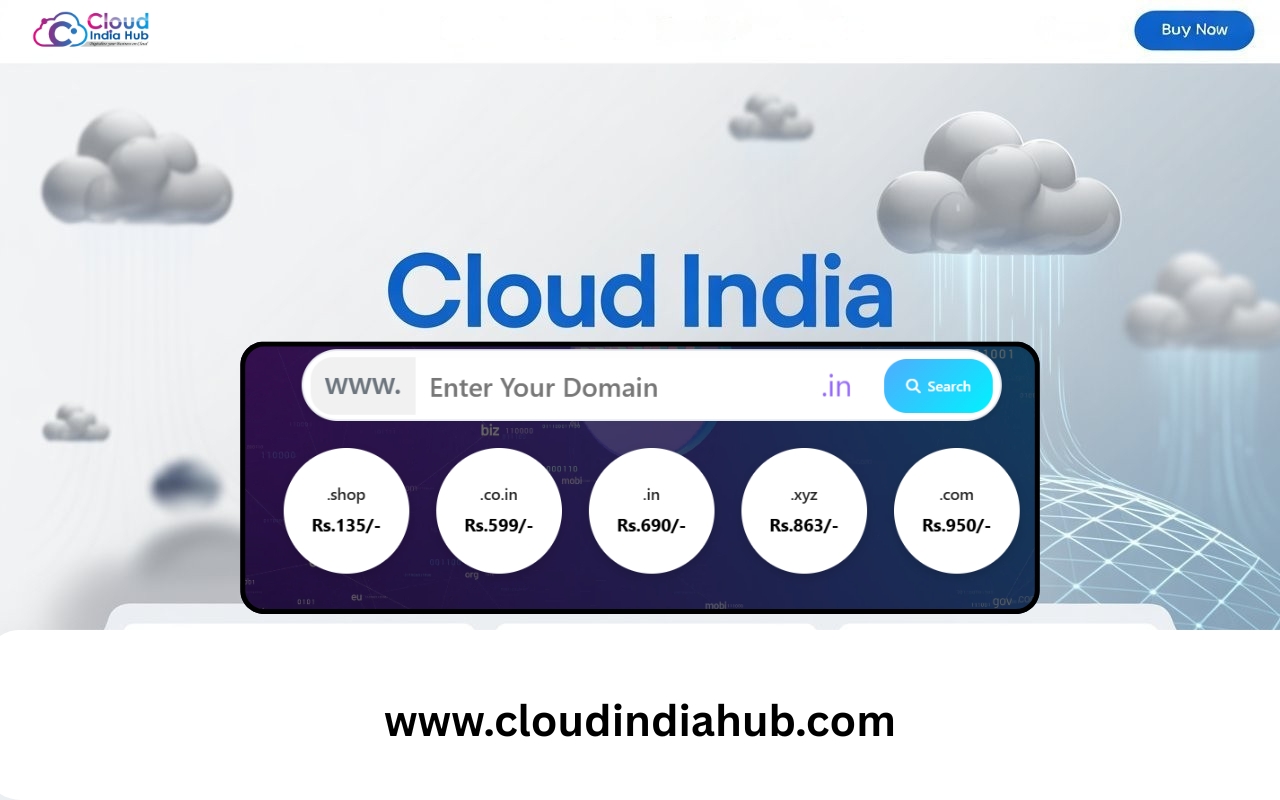
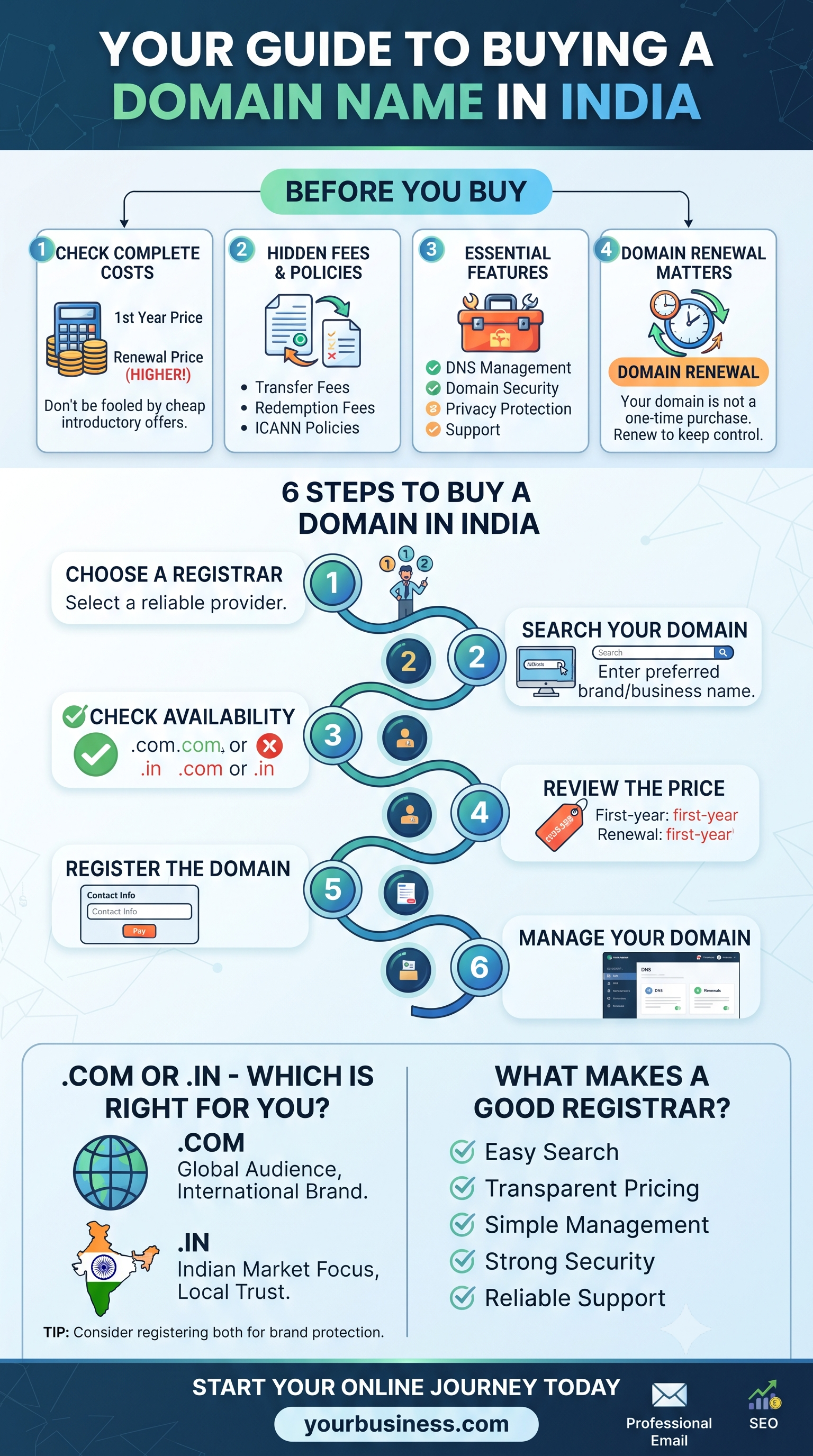
Domain registration in India ranges from roughly one rupee for a promotional .in domain to around a thousand rupees for a standard .com, with renewal prices usually higher than the first-year offer. Extension choice is the biggest cost driver, followed by the registration term you select at checkout.
Cheap domain booking India offers are common in the first year, so always check the renewal rate before you commit to a name you plan to keep long term. A three-year term at a locked price can work out cheaper overall than renewing a one-year deal three times.
| Extension | Typical first year price | Best suited for | Renewal price behaviour |
|---|---|---|---|
| .in | Rs 1 to Rs 99 | Indian businesses and local brands | Usually rises to Rs 500 to Rs 900 |
| .com | Rs 199 to Rs 950 | Global or brand-first businesses | Rises moderately after year one |
| .co.in | Rs 300 to Rs 600 | Commercial entities in India | Similar to .in renewal pattern |
| .xyz | Rs 100 to Rs 900 | Startups, personal projects | Renewal can be higher than .com |
| .shop | Rs 135 upward | Online stores and e-commerce | Renewal is typically higher |
Prices vary by registrar and current promotions, so treat this table as a starting range rather than a fixed quote. Always open the cart summary before payment, since the renewal figure is usually shown in smaller text below the discounted first-year price.
What do you need before you book a domain?
You need a proposed domain name, a valid email address, a phone number, and a payment method. That is the entire domain name registration process at the individual level, no business registration or GST number required for a personal or small business domain.
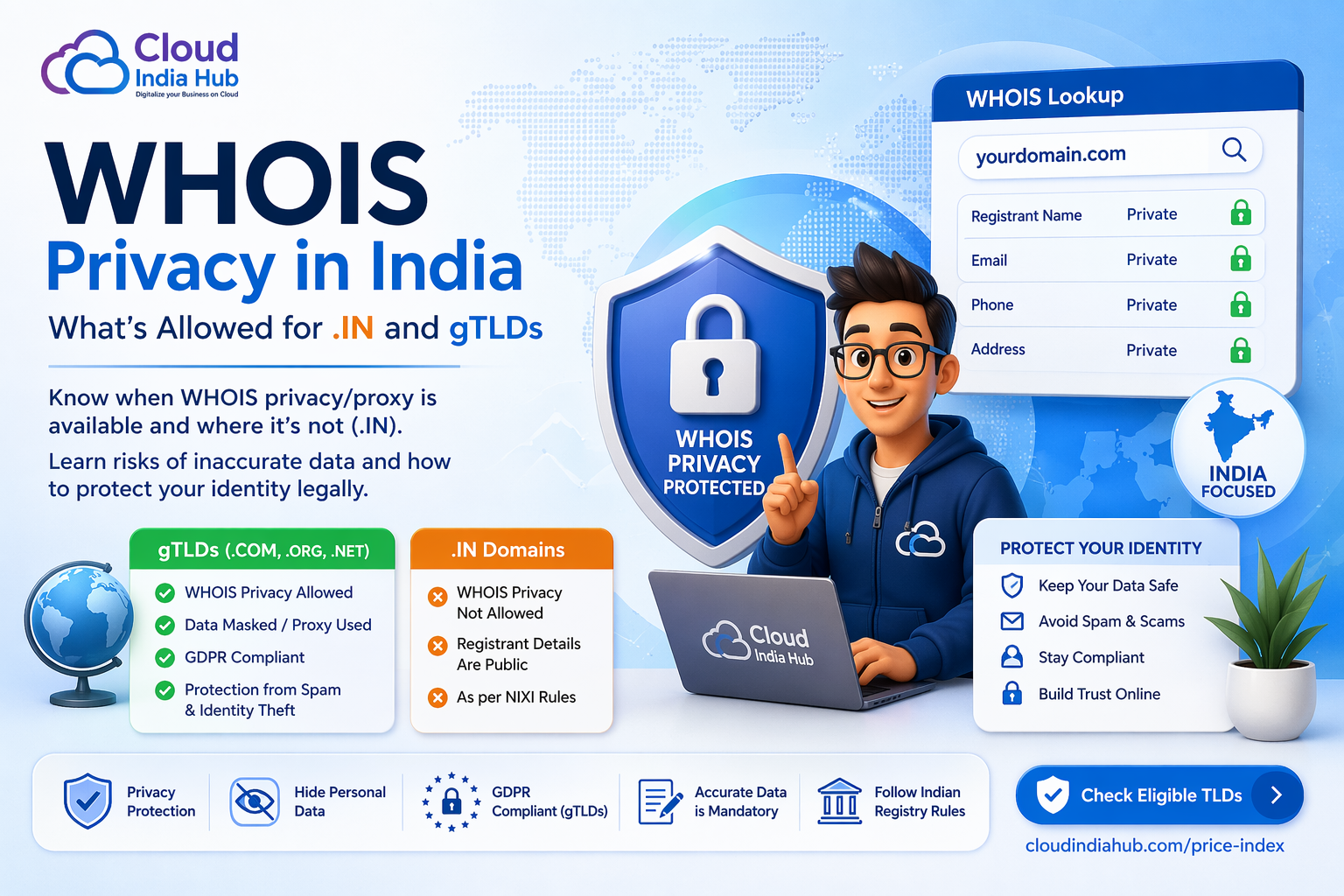
If you are registering on behalf of a company, keep your organisation name and address on hand since some extensions ask for it at checkout. Domain locking and WHOIS privacy protection are optional add-ons worth selecting at the same step, since they prevent unauthorised transfers and hide your personal contact details from public lookups.
Keep a copy of the confirmation email once payment clears. It contains your order ID, which most registrars ask for if you ever need to raise a support ticket or prove ownership during a dispute.
How do you choose the right domain name for your brand?
Pick a name that is short, easy to pronounce, and free of hyphens or numbers, since those details affect how reliably people remember and share it. Match the extension to your audience: .in signals a local business, while .com reads as international by default.
A few practical filters help narrow the search fast:
- Keep it under 15 characters where possible
- Avoid words that are hard to spell over the phone
- Check the name is not a live trademark before you commit to it
- Pair the domain with web hosting so the site is ready the same day
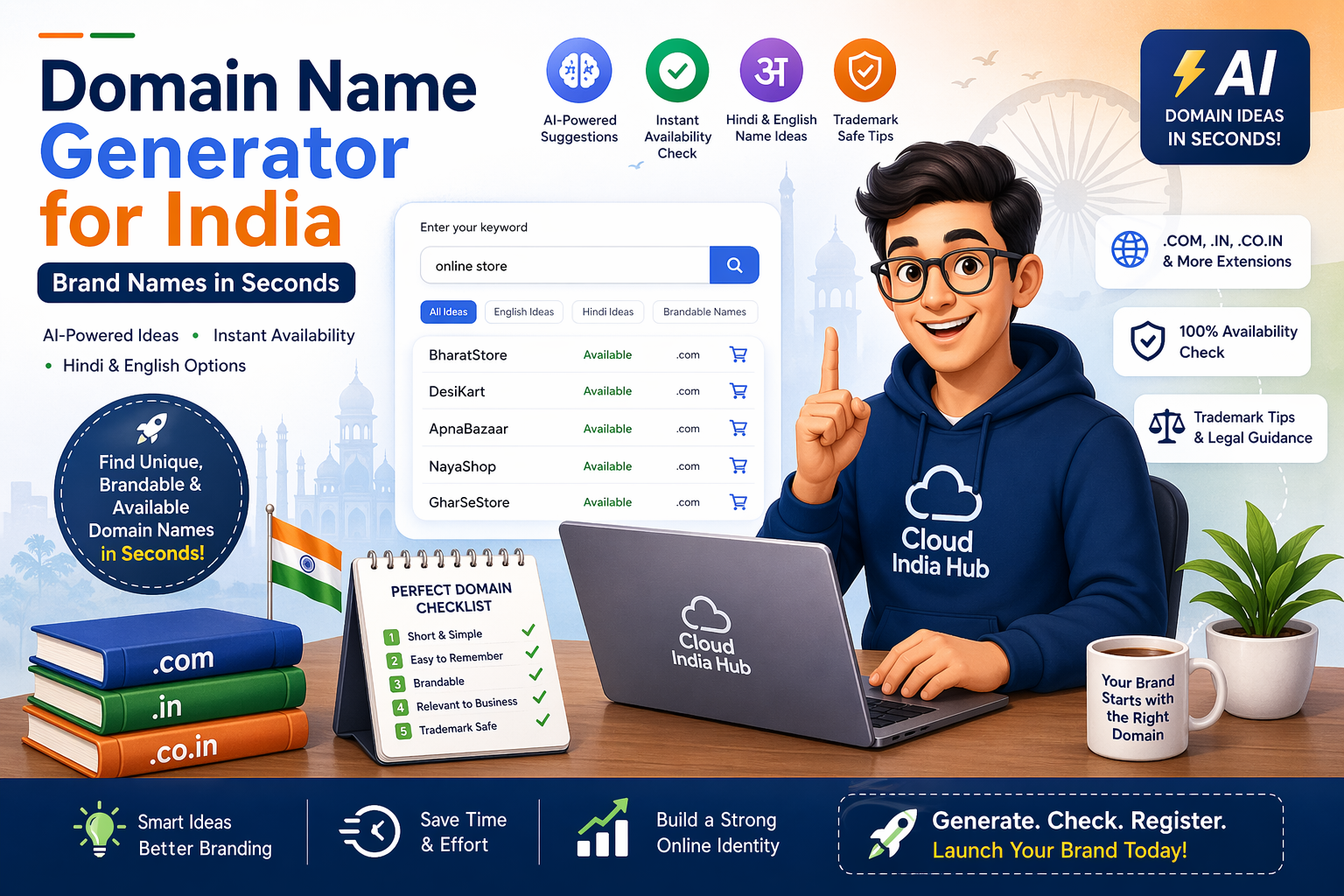
Once the name is locked in, run it through a live domain availability check before you build any branding around it, since a name can be released or grabbed within hours. It helps to shortlist two or three alternatives in advance, so a taken name does not stall the whole launch.
Domain booking vs domain transfer vs renewal: what is the difference?
Domain booking creates a brand-new registration, domain transfer moves an existing domain between registrars, and renewal extends a domain you already own. Each one follows a different process and, in most cases, a different price.
| Action | What happens | Typical timeframe | When you would use it |
|---|---|---|---|
| New registration | New name registered under your details | Instant to a few minutes | Launching a new site or brand |
| Domain transfer | Domain moves from one registrar to another | 5 to 7 days | Switching providers, keeping the same name |
| Domain renewal | Registration period is extended | Instant | Keeping an active domain from expiring |
Confusing renewal with transfer is a common mistake. Renewal never changes who manages your DNS, while a transfer does, so plan a transfer only when you actually intend to switch registrars.
Most registries also require a domain to be at least 60 days old before it becomes eligible for transfer, so factor that waiting period into any provider switch.
How do you book a domain name online step by step?
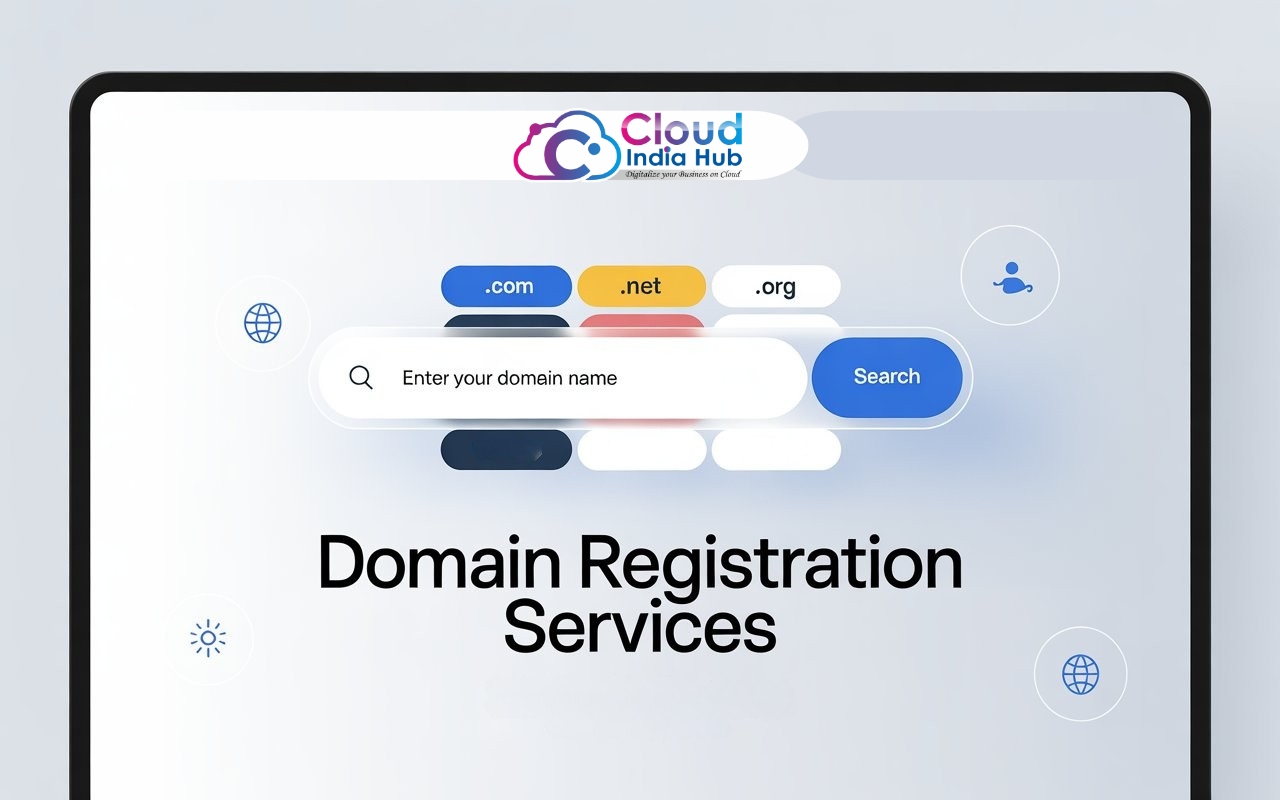
Registering a domain online takes five steps and usually finishes in under ten minutes once you know what you want. This section covers how to book a domain name online across most Indian registrars, since the process barely changes even when the interface does.
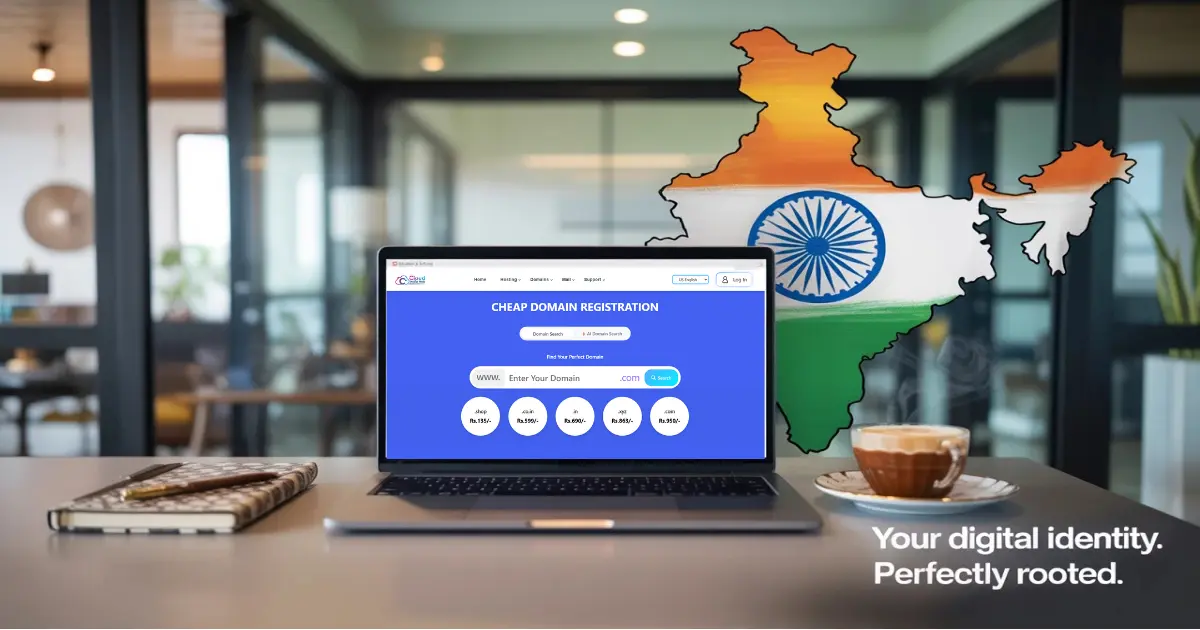
- Search the name and check availability across extensions
- Pick the extension that fits your brand and budget
- Add domain privacy and locking if the registrar offers them
- Enter contact details and complete payment
- Verify the confirmation email to activate the domain
Cloud India Hub bundles this with hosting through its domain and hosting offers, so the same checkout can get your site live rather than just reserving the name.
That single-cart approach also avoids the mismatch that happens when a domain and its hosting sit with two different providers and one renewal date slips past the other.
Frequently asked questions
Is domain booking the same as buying a domain?
Yes, domain booking and buying a domain describe the same action, reserving a name with a registrar. "Booking" is common phrasing in India, while "registration" is the formal term used by registries.
How long does a domain registration last?
A new registration typically runs for one year by default, though most registrars let you extend it up to ten years at checkout. Set auto-renewal on if you want it to renew automatically.
Can I register a domain without hosting?
Yes, a domain and hosting are separate services, so you can register a name and point it elsewhere later. Many registrars, including Cloud India Hub, also offer a free domain with certain hosting plans.
Does registering a domain include an SSL certificate?
No, registering a domain only reserves the name. SSL is usually bundled with a hosting plan rather than the domain itself, so check your hosting provider's inclusions before you assume it is covered.
What happens if I do not renew my domain on time?
Your domain enters a grace period, then typically a redemption phase with a higher recovery fee, and finally becomes available for anyone else to register. Renewing on time avoids all three stages.
Which extension is best for registering a domain in India?
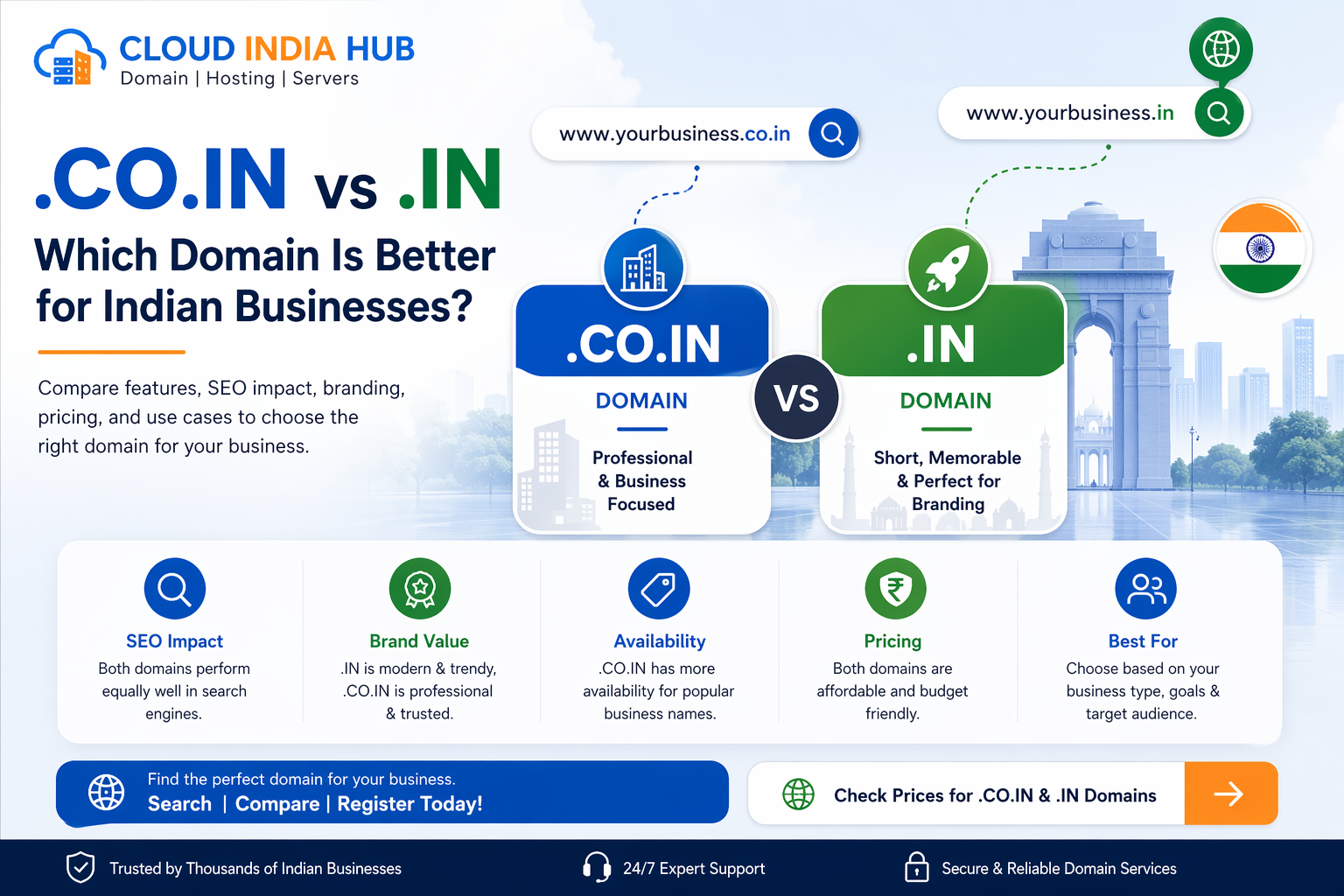
.in suits businesses targeting Indian customers, while .com works better for brands with international ambitions. Both are widely supported and equally easy to set up through any accredited registrar.
What should you do next?
If you already have a name in mind, run the availability check and complete your domain booking before someone else claims it. Pair it with a hosting plan at checkout so the site itself is ready the same day rather than sitting on a parked page.
Still unsure which extension or plan fits your project? Contact Cloud India Hub's support team for free advice on choosing and registering the right domain for your business.

























































































































































Leave A Comment